
When planning a Ramadan Tent setup in Dubai for 2025. It’s important to follow the city’s regulatory requirements to ensure safety, legality, and a smooth event experience. Dubai Municipality mandates that all tents used for Ramadan events must adhere to strict public safety and fire-resistant standards. Including using fire-resistant materials, proper electrical arrangements, and clearly marked emergency exits to protect occupants.
Permits are required for commercial and larger public tents, and these must be approved by relevant authorities. Such as Dubai Municipality and Civil Defence to ensure compliance with safety and health guidelines. Additionally, licensed tents hosting food services must maintain food safety standards as part of intensive monitoring campaigns conducted throughout Ramadan.
By respecting these regulations, hosts can create secure and enjoyable environments for iftar and community gatherings. Global Tents and Events Company is fully knowledgeable about these Dubai Ramadan Tent regulations. And can guide you through the compliance process, ensuring your event setup meets all legal and safety requirements for a worry-free celebration.
Legal Requirements and Licensing
Global Tents and Events Company operates in full compliance with all applicable local and national regulations governing event management and temporary structures. The company ensures that every Ramadan Tent setup meets safety, zoning, fire. And health requirements by securing the necessary permits and licenses from relevant authorities.
This includes approvals for temporary installations, electrical and fire safety clearances, occupancy limits, and environmental standards. By adhering to these legal requirements. Global Tents and Events Company guarantees safe, lawful, and hassle-free operations for clients during Ramadan and other events.
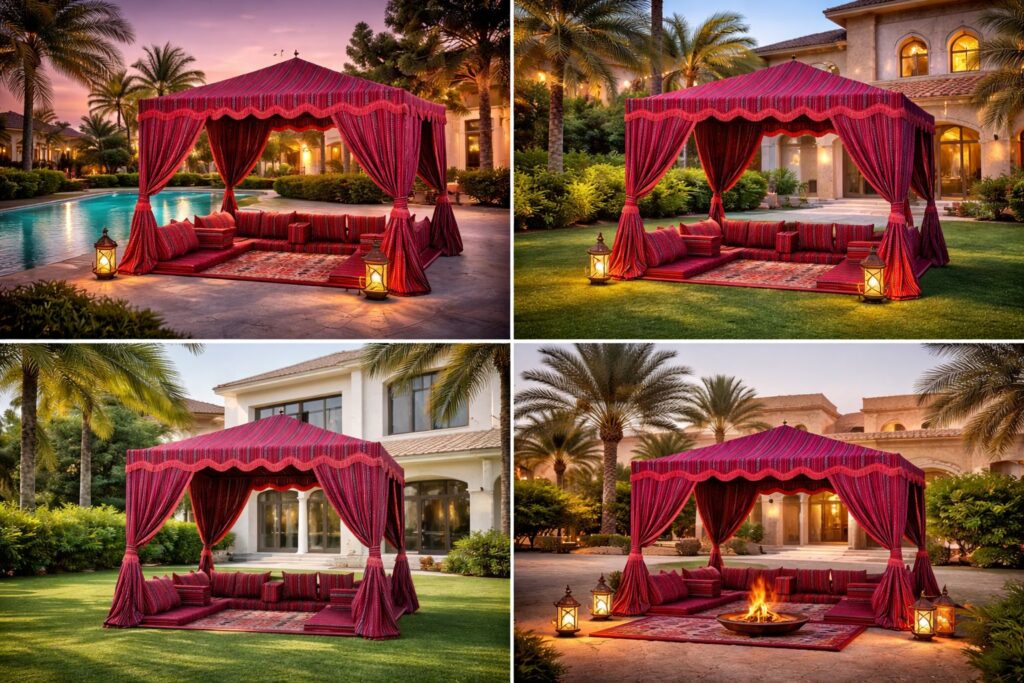
We Provided Structural and Safety Standards
We Provided Structural and Safety Standards to ensure every Ramadan Tent is secure, reliable, and built for complete peace of mind. Global Tents and Events Company follows strict safety guidelines. Using strong materials and professional installation methods to maintain stability and durability.
Each Ramadan Tent is carefully inspected to meet structural requirements. Ensuring safe use for families, corporate guests, and large community gatherings. With expert planning and quality checks, Global Tents and Events Company delivers safe. Well-structured tents that allow you to celebrate Ramadan confidently and comfortably. The materials used in tent construction must be fire-resistant and meet Dubai’s building code requirements.
Electrical and Lighting Installations
Electrical and lighting installations are an essential part of creating a safe and welcoming Ramadan Tent setup. Global Tents and Events Company provides professional electrical planning, proper wiring, and beautifully arranged lighting to enhance the overall atmosphere of the tent.
From soft ambient lights to functional power connections for cooling and catering equipment. Every installation is handled with care and safety in mind. Well-designed lighting not only improves visibility but also adds a warm and peaceful feel that perfectly suits Ramadan gatherings.
Location and Spatial Considerations
Location and spatial considerations play a vital role in planning a comfortable and well-organized Ramadan Tent. Global Tents and Events Company carefully evaluates the event location to ensure proper space utilization, smooth guest movement, and safe access points.
Factors such as ground condition, nearby facilities, parking, and airflow are all considered to create a balanced layout. Proper spacing for seating, dining, and service areas helps maintain comfort and privacy. Allowing guests to enjoy a peaceful and memorable Ramadan experience.
We care Health and Hygiene Regulations
We care deeply about health and hygiene regulations to ensure every Ramadan Tent provides a safe and clean environment for guests. Global Tents and Events Company follows strict cleanliness standards, including regular sanitization of tents, seating, and dining areas.
We carefully plan proper waste management, clean flooring, and hygienic food service spaces to meet local regulations. By maintaining high health and hygiene practices. We help create a comfortable and worry-free Ramadan gathering for families, communities, and corporate events.
Noise and Community Considerations
Noise and community considerations are important when setting up a peaceful and respectful Ramadan Tent. Global Tents and Events Company properly manages sound systems to maintain a calm atmosphere while respecting nearby residents and businesses.
We plan event layouts to reduce noise disturbance by placing speakers carefully and choosing appropriate timing. By following local guidelines and showing care for the surrounding community. We help create a harmonious Ramadan experience that is enjoyable for guests and considerate to everyone around.
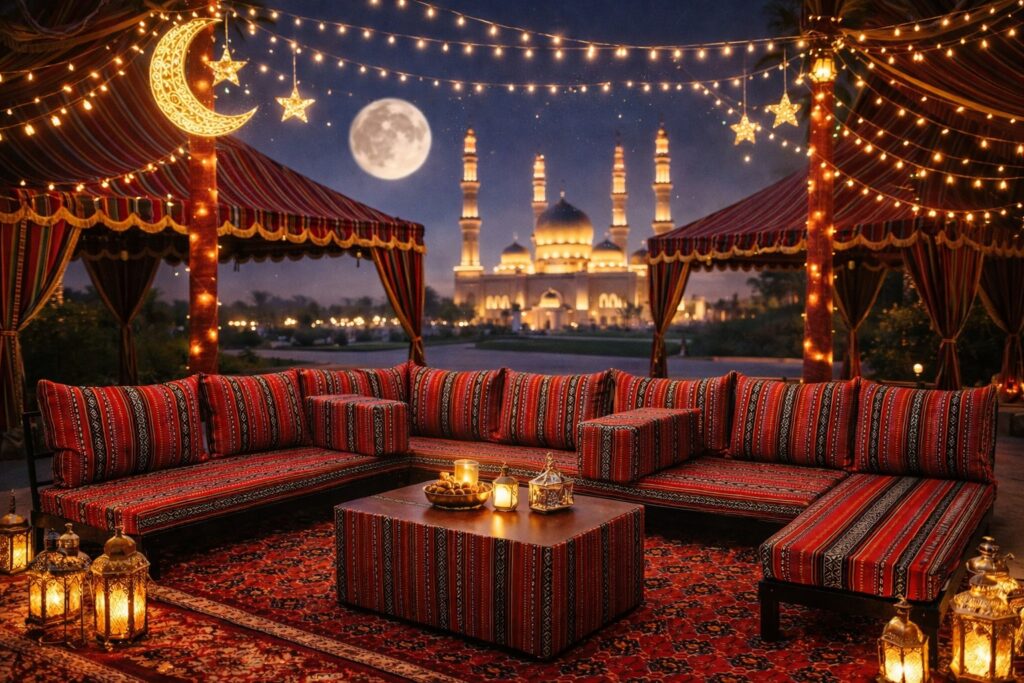
Security and Emergency Preparedness
Security and emergency preparedness are essential for every Ramadan Tent setup to ensure the safety of all guests. Global Tents and Events Company follows strict safety measures. Including clear emergency exits, proper fire safety equipment, and trained staff ready to respond quickly if needed.
We also ensure safe electrical connections and stable tent structures to prevent any risks. By planning for emergencies and maintaining strong security standards, we create a secure and worry-free environment for Ramadan gatherings.
Environmental Responsibility
Environmental responsibility is an important part of planning any Ramadan Tent event, and Global Tents and Events Company is committed to reducing environmental impact. The company uses eco-friendly materials whenever possible, ensures proper waste disposal, and promotes recycling to keep the event area clean.
By choosing energy-efficient lighting and reducing single-use items. We help protect the environment while still creating a beautiful and comfortable setup. This responsible approach ensures that Ramadan celebrations remain respectful to nature and the community.
Consequences of Non-Compliance
Failure to adhere to Ramadan tent regulations can result in serious consequences, including fines, permit revocation, and mandatory dismantling of the tent.
Authorities conduct routine inspections throughout the holy month to ensure compliance. And any violations related to fire safety, hygiene, noise pollution, or unauthorized setups are addressed promptly.
In cases of repeated non-compliance, individuals or businesses responsible for organizing Ramadan tents. May face legal action, including temporary suspension of event permits for future Ramadan seasons.
Therefore, it is crucial for organizers to familiarize themselves with regulatory guidelines and uphold the highest standards of safety and community responsibility.
Conclusion
In conclusion, a well-planned Ramadan Tent can create a warm and memorable atmosphere for family gatherings, community events, and corporate celebrations. Global Tents and Events Company offers professional and reliable services that cover every detail. From setup and lighting to health, safety, and environmental responsibility.
With experienced staff and high-quality equipment, we ensure a smooth and enjoyable Ramadan experience for all guests. Choosing the right provider makes your event more comfortable, beautiful, and stress-free.